
What If Communication Isn't the Real Problem in Your Relationship?
By Courtney Bergin, MBA, LCSW, LICSW and Jessica Harrison, LICSW
Why Communication Gets the Blame
If you've ever Googled relationship advice, you've probably been told that communication is the key to a healthy relationship. And while communication certainly matters, I think it's been given a little too much credit.
When couples come to therapy, one of the first things I hear is, "We just need to communicate better."
Sometimes that's true.
But more often than not, communication isn't the real problem. It's simply the most obvious one.
Think about it this way: communication is what we can see. It's the argument about the dishes, the misunderstanding about weekend plans, the conversation that somehow spirals into something completely unrelated. It's easy to point to because it's happening right in front of us.
What's much harder to see are the emotions, experiences, and protective patterns driving those conversations.
Communication gets blamed because it's visible. It's concrete. It's easier to say, "We don't communicate well," than it is to say, "I'm terrified you'll reject me," or "I don't know how to ask for what I need," or "Conflict makes me feel emotionally unsafe."
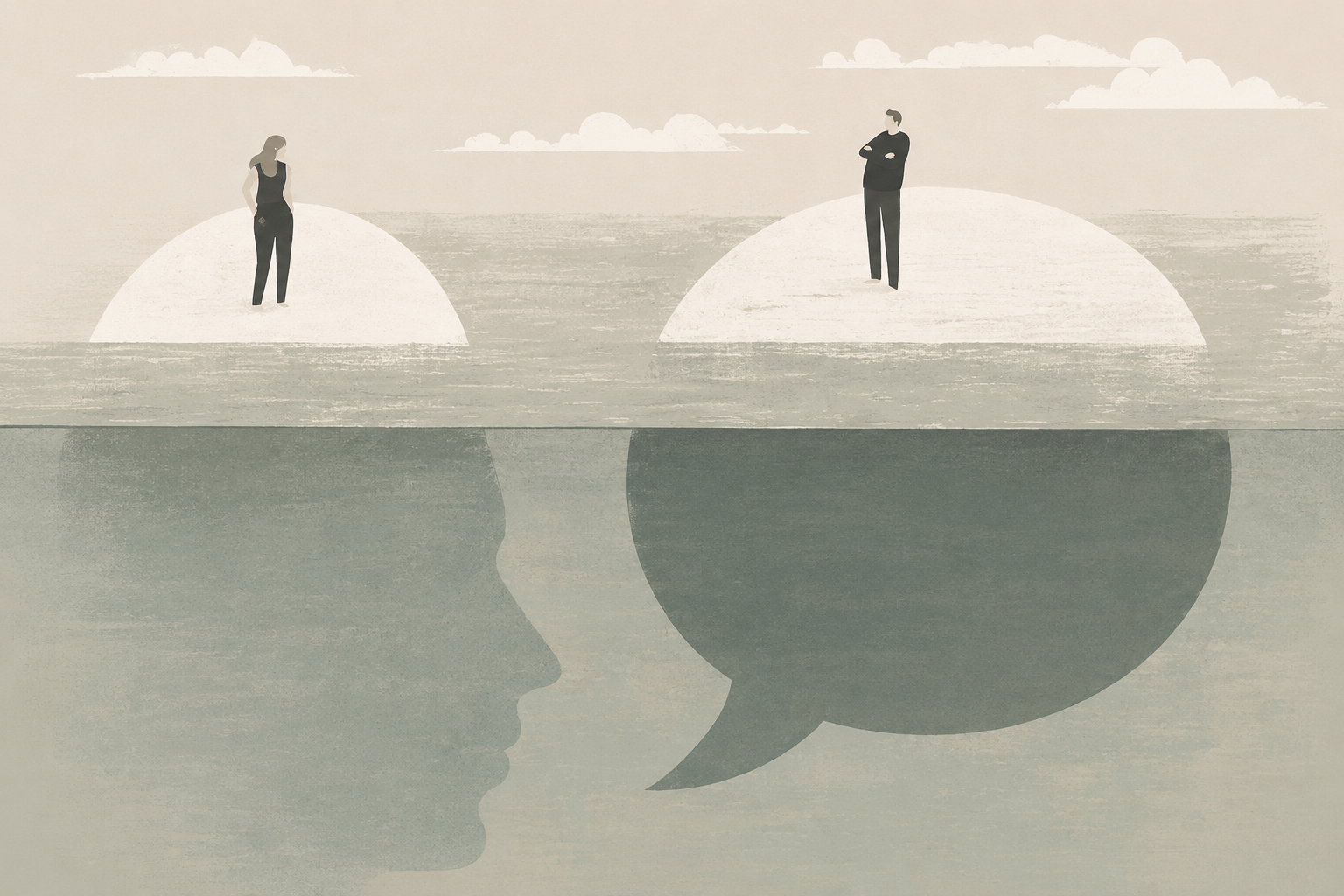
Most of us aren't actually arguing about the dishes.
We're arguing about feeling unseen, unheard, overwhelmed, or unimportant.
Those are much harder conversations to have.
What's Really Underneath Communication Problems?
One of the things I love most about being a therapist is helping people realize there's almost always more happening beneath the surface than they initially recognize.
Communication struggles rarely develop in isolation.
Sometimes anxiety is running the show. Your mind is already imagining the worst possible outcome before the conversation has even started. Sometimes past experiences have taught you that expressing emotions isn't safe. Maybe your feelings were dismissed growing up. Maybe conflict was unpredictable. Maybe you learned that staying quiet was easier than risking someone else's reaction.
Other times, your nervous system simply becomes overwhelmed.
When we're emotionally activated, our brains shift into protection mode. Our goal stops being connection and starts becoming survival.
That's why it's so common to leave an argument thinking, "Why did I say that?" or "Why couldn't I just tell them what I was actually feeling?"
Because in that moment, your nervous system wasn't focused on finding the perfect words. It was focused on keeping you safe.
What Your Nervous System Has to Do With Conflict
When we experience conflict, our bodies respond long before our logical brains catch up.
We often think we're making conscious choices during an argument.
In reality, our nervous systems are making many of those decisions for us.
Some people move into fight mode. They become defensive, critical, or argumentative. Their nervous system is trying to protect them by taking control.
Others move into flight. They change the subject, leave the room, stay busy, or avoid difficult conversations altogether.
Some people freeze. Their minds go blank. They shut down. They genuinely can't find the words they're looking for, even though they desperately want to.
Others move into fawn, automatically trying to keep the peace by agreeing, apologizing, or putting their own needs aside to avoid conflict.
None of these responses mean you're "bad" at communication. They're normal survival responses that developed for a reason. The problem is that the strategies that once protected us don't always help us build healthy adult relationships.
Why It's So Hard to Say What We Really Mean
Have you ever finished an argument and immediately thought of everything you wish you had said?
Or found yourself saying, "I'm fine," when you were anything but?
Most people don't struggle to communicate because they lack vocabulary. They struggle because honesty feels vulnerable.
Saying, "I felt hurt when that happened," requires a very different level of courage than saying, "You never listen to me."
Admitting, "I'm afraid I'm not enough," feels much riskier than criticizing someone else's behavior.
For many of us, vulnerability carries the possibility of rejection, conflict, disappointment, or shame. So, we protect ourselves the best way we know how. We become defensive. We avoid the conversation. We minimize our feelings. Or we convince ourselves we don't need anything at all.
The irony is that the very strategies designed to protect us often create the disconnection we're trying so hard to avoid.
Understanding what's happening beneath your communication patterns isn't about placing blame on yourself or your partner. It's about recognizing that if we only focus on the words being said, we'll miss the emotions, fears, and nervous system responses driving them.
When we become curious about what's underneath the conflict instead of simply trying to communicate "better," we create the opportunity for something much more meaningful: genuine understanding, emotional safety, and lasting connection.
Grasping the underlying causes of communication difficulties can be incredibly empowering. It helps us realize that we're not "bad communicators" or broken partners—we're often doing our best with patterns that developed long before our current relationship began. But while these protective strategies may make sense, they don't just affect our internal experience. They also shape the way we connect, communicate, and respond to the people we love.
That's where Jessica Harrison, LICSW, brings an invaluable perspective. As a couples therapist, she works with partners who find themselves stuck in the same arguments, misunderstandings, and conflict cycles, even when they genuinely love each other. In the next section, she'll explore what these deeper patterns look like within a relationship and how couples can begin creating the emotional safety that allows communication to become more meaningful—and more effective.
When Communication Isn't the Real Problem
Many couples come to therapy believing they have a communication problem. They keep having the same argument, cannot seem to understand each other, or feel like every conversation turns into a fight.
More often, communication difficulties are a symptom of a larger relationship pattern. When couples focus only on the words being said, they can miss what is happening underneath.

The Pursuer-Withdrawer Cycle
One of the most common relationship patterns is known as the pursuer-withdrawer cycle.
In this pattern, one partner notices a problem and wants to address it. They may ask questions, push for a conversation, express frustration, or repeatedly bring up the issue. The more disconnected they feel, the more they pursue.
The other partner often experiences the conversation very differently. They may feel criticized, overwhelmed, pressured, or unsure how to respond. As the conversation becomes more intense, they begin to shut down, withdraw, or avoid the discussion.
The more one person pursues, the more the other withdraws. The more one person withdraws, the more the other pursues. Before long, both people feel frustrated and misunderstood.
Neither partner is trying to hurt the other. They are each responding to the same cycle in different ways.
The Hurt Underneath the Argument
One reason couples stay stuck is that the argument often becomes focused on the surface issue instead of the deeper emotions underneath it.
A disagreement about dishes, spending time together, or texting may not really be about dishes, schedules, or communication. Often, there is a deeper feeling driving the conversation.
The partner asking for help with the dishes may actually be feeling alone. The partner asking for more quality time may actually be feeling disconnected. The partner frustrated about unanswered texts may actually be seeking reassurance that they matter.
When these deeper emotions remain unspoken, couples often end up arguing about the same issue repeatedly without ever addressing what is underneath it.
How Attachment Influences Conflict
Attachment styles can also influence how people respond during conflict.
People with more anxious attachment tendencies often move toward the relationship when they feel disconnected. They may seek reassurance, ask more questions, or want to resolve the issue immediately.
People with more avoidant attachment tendencies often move away from the relationship when they feel overwhelmed. They may need space, become quieter, or avoid the conversation altogether. Neither response is inherently wrong.
The problem is that these responses can unintentionally trigger each other. The more one partner seeks closeness, the more overwhelmed the other may feel. The more one partner creates distance, the more anxious the other may become. This can strengthen the pursue-withdraw pattern.
Why Communication Skills Alone Are Not Enough
Communication skills can be helpful. Learning to listen, validate feelings, and express concerns clearly can improve conversations. However, communication skills alone often do not resolve the problem when couples remain stuck in the same cycle.
A couple can learn the perfect communication script and still struggle if they do not understand what is happening underneath the interaction.
This is why understanding the pattern is so important. When couples begin to recognize the cycle, they often stop seeing each other as the problem.
Instead, they start seeing the pattern as the problem which can create more compassion, curiosity, and teamwork.
Slowing the Cycle Down
Conflict often happens quickly. People react before they understand what they are feeling or why. One of the most valuable things couples can do is slow the process down.
Instead of focusing only on what was said, try to understand what happened before the reaction. What emotion showed up? What need was underneath it? What story did you tell yourself about your partner's behavior? What made the situation feel so important?
If you find yourself struggling to identify what is happening in the moment, this free Pattern Tracker Worksheet can help you slow the process down and better understand the cycle.
Connection Before Problem Solving
Many couples try to solve the practical problem first. They focus on chores, schedules, finances, parenting decisions, or household responsibilities. While those conversations matter, they are often more productive after both people feel understood.
Connection creates emotional safety. Emotional safety makes productive conversations more likely.
When couples better understand the patterns driving their conflict, they can begin responding differently when those patterns appear. Small changes in awareness can create meaningful changes in communication, connection, and trust.
If you find yourself having the same arguments over and over again, relationship counseling can help you better understand the cycle, identify what keeps it going, and develop healthier ways of responding when it shows up.
Final Thoughts
It's easy to believe that if you could just find the right words, your relationship would improve. But more often than not, communication isn't the real problem—it's the messenger. Beneath the conversations about chores, schedules, finances, or parenting are deeper needs, fears, and experiences that shape how we show up with the people we love. When we begin to understand those underlying patterns, we stop seeing each other as the problem and start working together to understand what's really happening.
Whether you're looking to better understand yourself or strengthen your relationship, support is available—and you don't have to navigate it alone.
Work with Courtney Bergin MBA, LCSW, LICSW at Bergin Counseling & Consultation
If anxiety, perfectionism, trauma, or high-functioning patterns are making it difficult to express your needs, regulate your emotions, or feel connected in your relationships, individual therapy can help. At Bergin Counseling & Consultation, I work with adults throughout Connecticut and Massachusetts to understand the root of these patterns, heal from past experiences, and develop healthier ways of relating to themselves and others. Together, we'll help you move beyond survival mode and create relationships that feel more authentic, connected, and fulfilling.
Learn more or schedule a consultation:
Bergin Counseling & Consultation
www.bergincounseling.com
Work with Jessica Harrison, LICSW
If you and your partner feel like you're having the same conversations over and over without truly understanding one another, couples therapy can help. At Jessica Harrison Counseling, Jessica helps couples move beyond recurring conflict, improve emotional safety, strengthen communication, and build deeper, more secure connections.
Learn more about Jessica's practice:
Jessica Harrison Counseling
https://www.jessicaharrisoncounseling.com
This article was written collaboratively by Courtney Bergin, MBA, LCSW, LICSW and Jessica Harrison, LICSW. Together, we are passionate about helping individuals and couples better understand themselves, strengthen their relationships, and create lives that feel more connected, authentic, and fulfilling.
All material provided on this website is for informational purposes only. Direct consultation of a qualified provider should be sought for any specific questions or problems. Use of this website in no way constitutes professional service or advice.